
 1300 285 885
 Battery Solar Installation Regulation with Solar Miner Australia : Power Your Future
Pondering about switching to solar power, advance your current setup, or making sure your business never runs out of energy? A robust and trustworthy solar battery system is the key!
At Solar Miner Australia, we make solar battery installation modest, smart, and stress-free, anywhere in Australia. Whether it’s for your home, business, or an off-grid setup, our solar expert team carries high-quality, long-lasting energy storage solutions that benefit you save more, stay powered, and live greener.
Important Requirements for Installing a Solar Battery in Australia
Setting up a solar battery system is not as humble as it may seem, it comprises thorough planning and compliance with strict safety standards. In Australia, all solar battery installations must meet the necessities of AS/NZS 5139:2019, the national standard that summarises safety and regulatory guidelines for battery energy storage systems.
- Follow national safety standards
- Ensure proper location and ventilation of the system
- Maintain fire safety and minimum clearance zones
- Hire certified and licensed installers
- Choose the right battery size that fits your existing solar setup
Working with a certified solar installer promises your system is safe, efficient, and fully compliant with Australian regulations.
Room Types Matter: Where You Can Install a Solar Battery
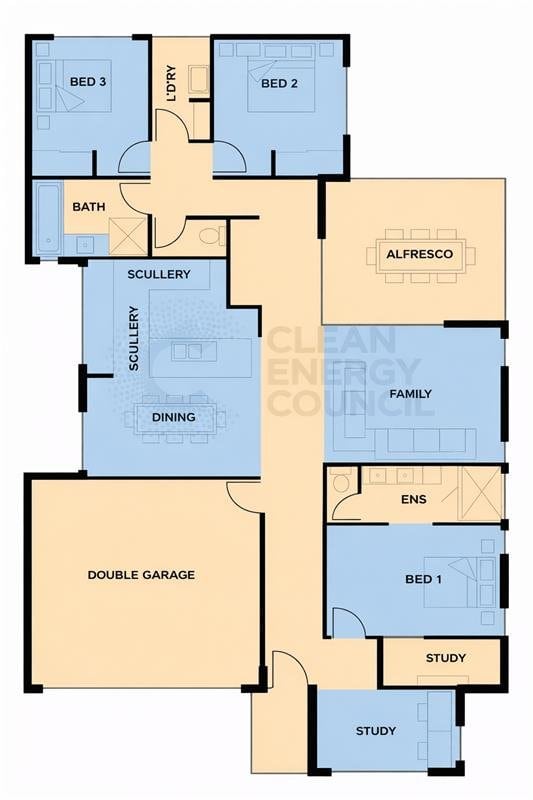
According to AS/NZS 5139:2019, specifically Clauses 4.2.4.2 and 5.2.4.2, the type of room located near a solar battery installation plays a critical role in determining where the system can be safely and legally installed.
- Habitable rooms (shown in red) include regularly occupied living spaces such as bedrooms, lounges, living rooms, and studies.
- Non-habitable rooms (shown in green) include garages, laundry rooms, storage areas, and other utility or service spaces.
Important Safety Rule
To comply with Australian safety standards, solar batteries must not be installed within 600mm of any vertical edge of a window or vent that opens into a habitable room. This requirement helps minimise fire risk and ensures the safety of occupants inside the property.
Safe Outdoor Solar Battery Installation: What Homeowners Need to Know
When installing a solar battery outdoors, the construction materials used in your home play a key role in ensuring safe placement and compliance with Australian regulations. Adhering to AS/NZS 5139:2019 guidelines is essential for both safety and regulatory approval.
Installation Guidelines Based on Home Construction
- Brick Homes: Brick is a non-combustible material, allowing greater flexibility for battery placement while easily meeting safety requirements.
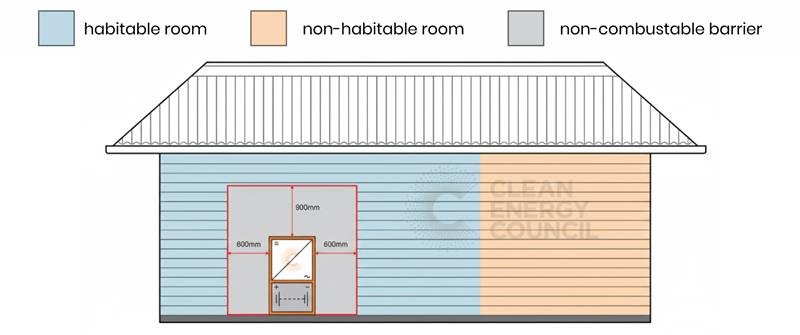
- Weatherboard Homes: Weatherboard is a combustible material. To meet safety regulations, a non-combustible barrier such as fire-rated cement sheeting must be installed between the battery and the house wall. This added protection is essential to reduce fire risk and ensure compliance.
Solar Battery Installation Scenarios: Key Safety Requirements
When installing solar batteries, it is important to follow precise spatial and safety guidelines to safeguard compliance with AS/NZS 5139:2019 and to decrease fire risks. Below are distinctive installation scenarios with corresponding safety requirements:
Entry and Exit Clearance
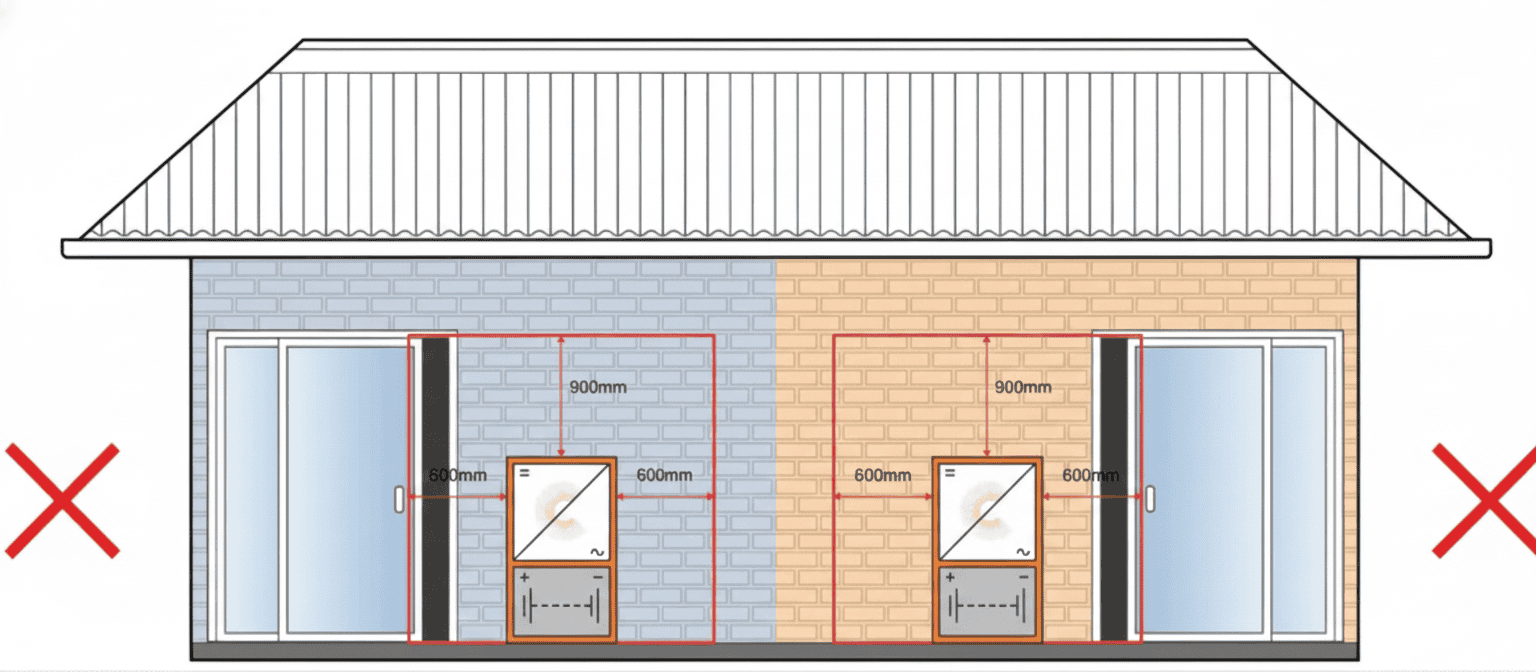
Solar batteries must not be installed within 600mm of any selected entry or exit point, including doors, pathways, or chief walkways. This is to preserve safe egress in case of emergencies.
Adjacent to Habitable Rooms
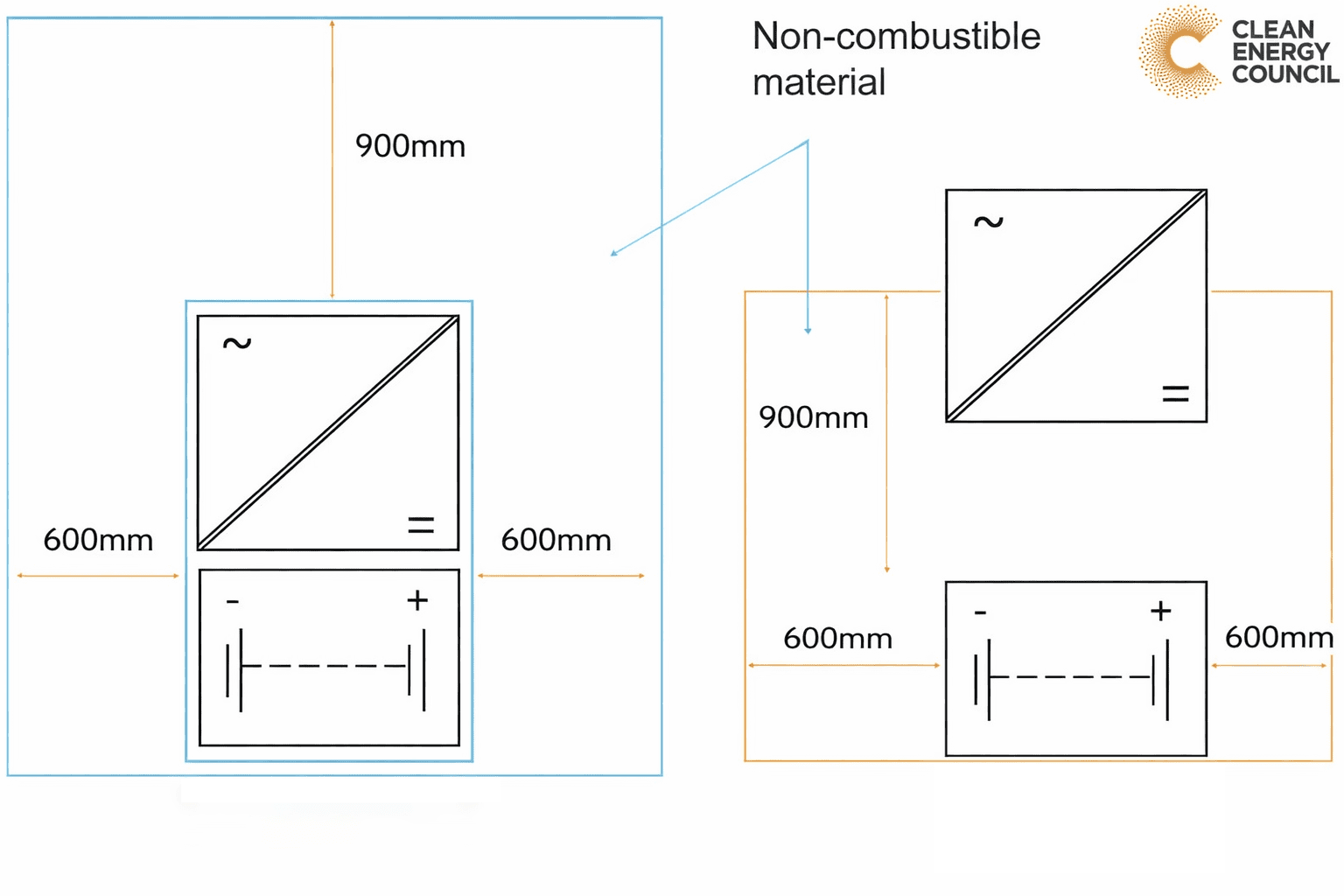
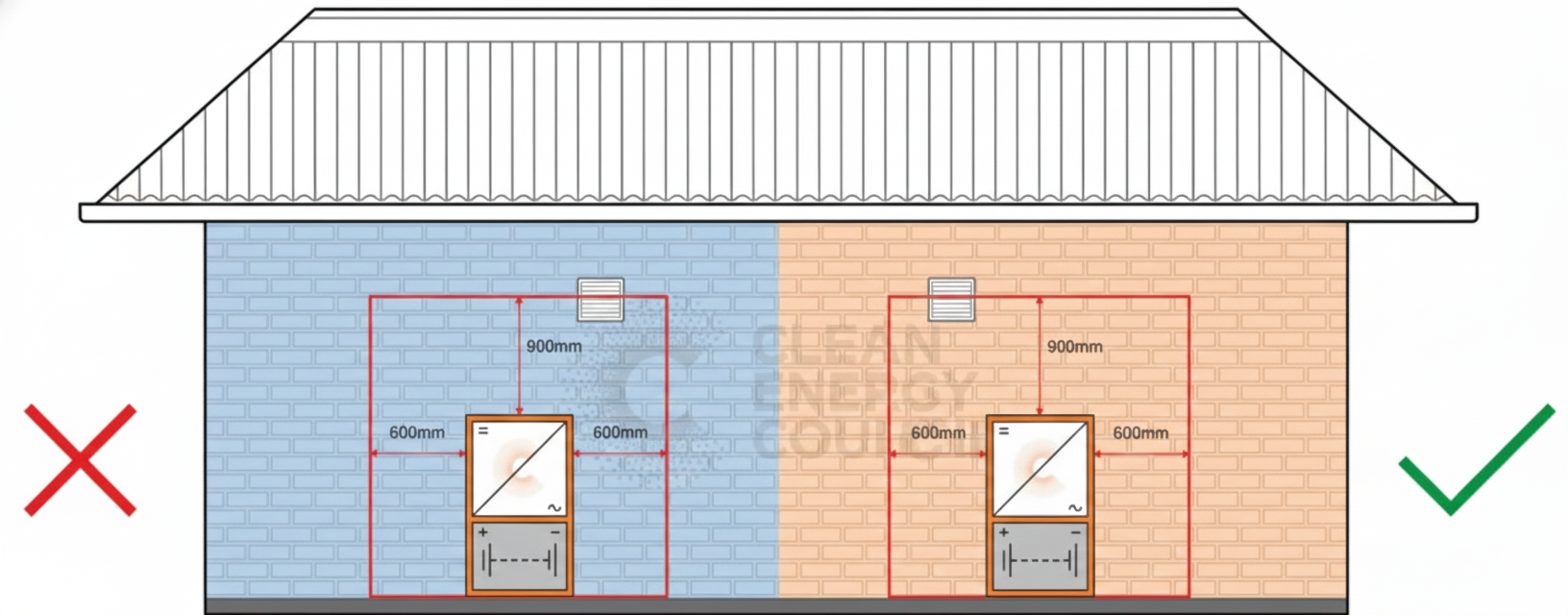
When a battery is installed near a habitable room, a non-combustible fire barrier is essential. This barrier must spread at least 600mm horizontally on both sides of the battery and 900mm vertically above it to encounter compliance and fire protection standards.
Proximity to Windows and Vents
Batteries must not be installed in outdoor habitable rooms if there are openable windows or vents situated within the restricted clearance zone. However, installation is allowed next to non-habitable rooms, such as garages or storage areas, even if these have nearby windows or vents.
Corner Installations Near Habitable Areas
For corner installations close to habitable rooms, the subsequent clearances are mandatory:
- A minimum 300mm gap must be sustained from the corner. - A non-combustible barrier must be installed, extending 600mm horizontally on both sides of the battery and 900mm vertically above it.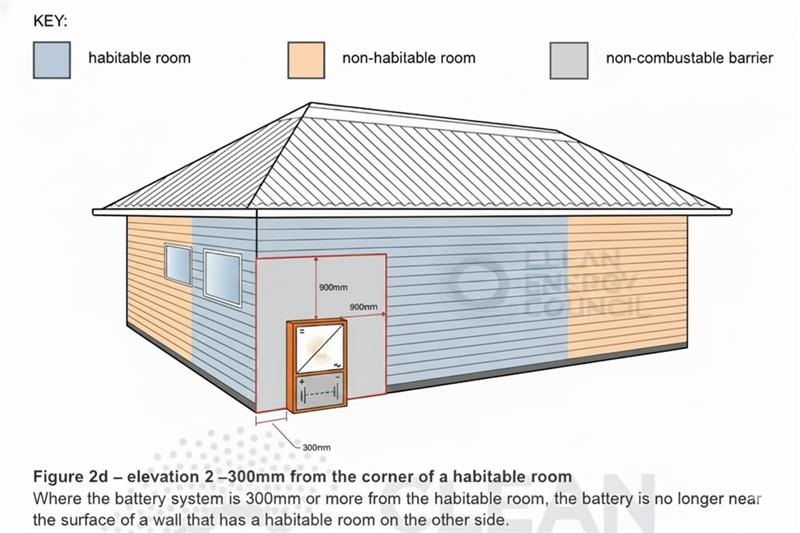
Best Indoor Locations for Solar Battery Installation
When installing a solar battery system indoors, choosing the right location and adhering to Australian safety standards is decisive. The following requirements are based on AS/NZS. 5139:2019 and state-specific regulations, will support confirming a safe, effective, and regulation-compliant setup.
Battery Installation Safety FAQs
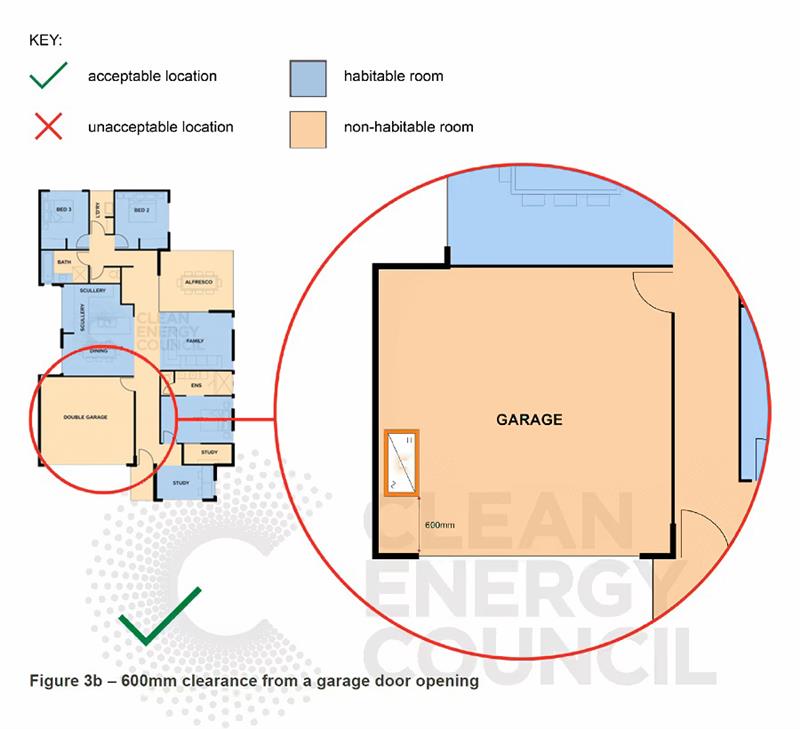
Indoor batteries must be installed in a clearly defined zone that meets the following criteria:
- The area must be well-ventilated
- It must be a non-habitable room (e.g., garage, utility room)
- It must allow safe access and emergency egress
Solar batteries must be positioned at a safe distance from ignition risks such as hot water units, gas meters and vehicles.
- Maintain at least 600mm clearance, or
- Use a certified non-combustible barrier (fire-rated wall)
- Victoria: 1000mm radius from gas meter vents
- Victoria: 1500mm clearance in the direction of gas discharge
- If installed in garages or near driveways, batteries must not be exposed to vehicle collision
- Install protective barriers or bollards where required
- Install a non-combustible backing board (fire-rated cement sheet)
- Use secure mounting hardware capable of supporting battery weight
- Proper ventilation is essential in enclosed areas like garages
- Ensure natural or mechanical airflow to prevent overheating
- Some batteries (e.g., lead-acid) require additional ventilation
- System identification labels
- “No Smoking” signage where required
- Visible and accessible emergency shutdown instructions
- Batteries must not be installed in habitable rooms
- Must not block garage doors, walkways or entry points
- Must not be installed in restricted clearance areas without protection
Leading Solar Technology Partners
We choose the most reliable solar brands for our customers.